Top Benefits of Aluminium Alloy Corrosion Resistance for Industry Use?
Aluminium alloys have revolutionized various industries with their outstanding properties. One significant advantage is their corrosion resistance. Dr. Emily Carter, a renowned expert in material science, states, "The remarkable Aluminium Alloy Corrosion Resistance makes it an ideal choice for demanding environments." This resistance enhances the longevity of components, leading to reduced maintenance costs.
Understanding the principles of Aluminium Alloy Corrosion Resistance is vital for industries that rely on durability. Industries such as aerospace and marine often face harsh conditions. Here, the ability to resist oxidation and deterioration sets aluminium alloys apart from other materials. It's worth noting, however, that while effective, this resistance is not absolute. Factors such as environmental conditions can still impact performance.
Incorporating aluminium alloys into design strategies can enhance product efficiency. Yet, this approach requires careful consideration and analysis. Not every application benefits equally from aluminium alloys. Industries must evaluate their specific needs before making a transition. Realizing the potential of Aluminium Alloy Corrosion Resistance means recognizing both its strengths and limitations.

Understanding Aluminium Alloys and Their Composition
Aluminium alloys are essential for various industries. Their unique composition defines their properties. Composed primarily of aluminium and other metals, these alloys exhibit remarkable characteristics. Common alloying elements include copper, magnesium, manganese, and silicon. Each addition alters the metal's strength, ductility, and corrosion resistance.
The corrosion resistance of aluminium alloys is noteworthy. It stems from a protective oxide layer formed on the surface. This layer inhibits further oxidation. However, not all alloys offer the same corrosion protection. Some may struggle under harsh conditions. For instance, alloys with high copper content can be more vulnerable to corrosion when exposed to saltwater.
Understanding the composition of aluminium alloys helps industries choose the right materials. Selecting the correct alloy is crucial for performance and durability. Awareness of potential pitfalls, such as localized corrosion, is vital. Assuring long-term reliability requires ongoing evaluation and testing. The right choices can significantly impact project success.
The Mechanisms Behind Corrosion Resistance in Aluminium Alloys
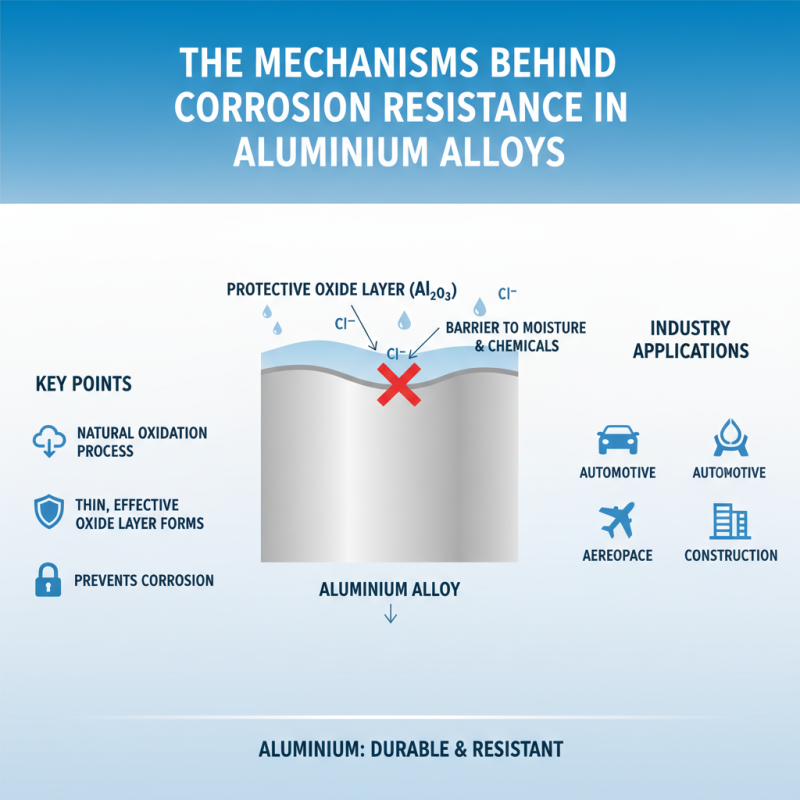
Aluminium alloys are known for their remarkable corrosion resistance. This quality stems from the natural oxidation process that occurs when aluminium is exposed to air. A thin but effective layer of oxide forms, protecting the underlying metal. This layer acts as a barrier, hindering moisture and harmful chemicals from reaching the alloy. Such mechanisms make aluminium alloys a preferred material in various industries.
Moreover, the specific composition of the alloy greatly influences its corrosion resistance. For instance, different alloying elements, like copper and magnesium, enhance or diminish resistance qualities. Understanding these interactions requires expertise. While many industries benefit from these materials, it's essential to recognize that not all aluminium alloys are equally resistant. For example, some may corrode faster under certain environmental conditions.
Testing is critical in assessing corrosion performance. It’s not always predictable. Real-world applications show varying results, prompting experts to continuously explore better alloy formulations. Professionals should remain vigilant, as unexpected corrosion can occur despite extensive research. Balancing the benefits and drawbacks of aluminium alloys is vital in achieving long-lasting industrial solutions.
Industrial Applications Benefiting from Aluminium Alloy Corrosion Resistance
Aluminium alloys are increasingly favored in various industrial applications due to their impressive corrosion resistance. This property is critical in sectors such as transportation, construction, and marine industries. Studies show that aluminium alloys can last up to 50 years without significant degradation, unlike many traditional materials that may require frequent maintenance or replacement.
In the automotive sector, corrosion resistance offers significant advantages. With lighter materials, vehicles made from aluminium alloys demonstrate improved fuel efficiency. A report indicates that using aluminium can reduce vehicle weight by up to 50%, enhancing performance while lowering emissions. The aerospace industry similarly benefits, as aluminium alloys resist harsh environments better than steel, leading to safer and longer-lasting aircraft.
The construction sector also sees substantial benefits. Buildings and structures relying on aluminium alloys sustain their appearance and integrity over time, even in coastal environments. This results in lower maintenance costs. However, it is essential to consider that not all aluminium alloys are equally resistant to corrosion. Some grades may still suffer in specific conditions, highlighting the need for careful material selection based on environmental exposure.
Top Benefits of Aluminium Alloy Corrosion Resistance for Industry Use
| Benefit |
Description |
Industries Affected |
| Durability |
Aluminium alloys can withstand harsh environmental conditions, enhancing the longevity of structures and components. |
Construction, Aerospace |
| Lightweight |
The low density of aluminium alloys makes them ideal for applications where weight reduction is critical. |
Transportation, Automotive |
| Cost Efficiency |
Corrosion resistance leads to lower maintenance costs and longer service life, making it a cost-effective choice. |
Manufacturing, Marine |
| Aesthetic Appeal |
Aluminium alloys can achieve a variety of finishes, offering enhanced visual appeal for architectural applications. |
Architecture, Design |
| Recyclability |
Aluminium is highly recyclable, promoting sustainability and reducing environmental impact. |
Construction, Electronics |
Comparative Analysis of Aluminium Alloys and Other Materials
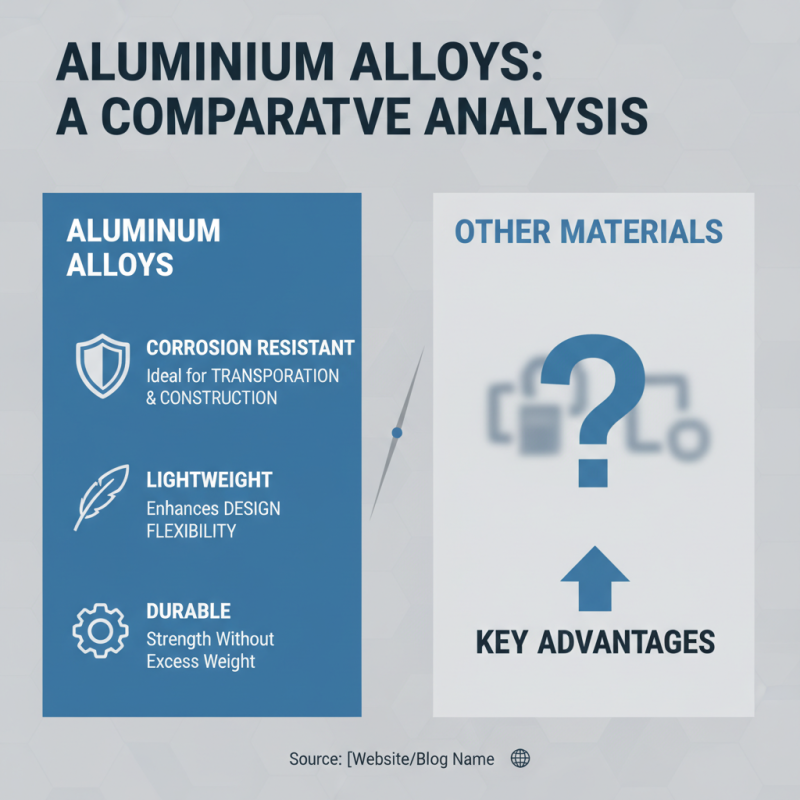
When comparing aluminium alloys to other materials, several factors come into play. Aluminium alloys are known for their corrosion resistance. This property provides advantages in many industries, particularly in transportation and construction. The lightweight nature of these alloys allows for design flexibility. Engineers often turn to aluminium in projects requiring durability without unnecessary weight.
Steel and other metals, while strong, are prone to rust and require protective coatings. Aluminium naturally forms a protective oxide layer, reducing maintenance needs. However, not all alloys offer the same level of resistance. Some may corrode more quickly in specific environments, such as coastal areas. Understanding these differences is crucial for industry applications.
While aluminium alloys excel in many scenarios, they aren't perfect. Their performance can vary based on the alloy composition and treatment. Furthermore, in high-stress environments, aluminium may not always match the sheer strength of steel. This complexity necessitates careful material selection and analysis. Industries must balance costs, performance, and longevity when choosing materials for their projects.
Future Trends in Aluminium Alloys and Corrosion Resistance Solutions
Aluminium alloys are increasingly recognized for their superior
corrosion resistance, crucial for various industries. Recent studies indicate that
the global aluminium alloys market is expected to reach USD 170 billion
by 2027. This surge highlights a growing reliance on next-generation materials.
Future trends in aluminium alloys focus on enhancing their corrosion resistance through
innovative coatings and treatments. Thin-film technology shows promise, as it can significantly improve
protection without adding bulk. For instance, a 2022 report revealed that utilizing advanced coatings can reduce
corrosion-related failures by up to 60%. This shift not only
minimizes maintenance costs but also extends the lifespan of products.
However, challenges remain. The balance between weight reduction and durability is complex. Researchers are exploring
hybrid materials that combine the best attributes of aluminium and other metals. Despite substantial progress, issues
like cost and scalability
of these innovations are still under evaluation. The path to improved corrosion resistance in aluminium alloys is paved
with ongoing experimentation and adaptation.